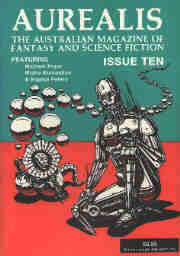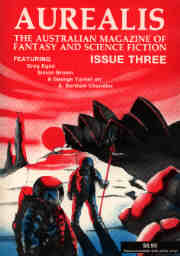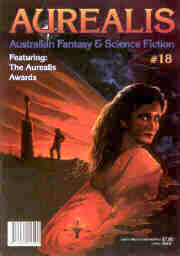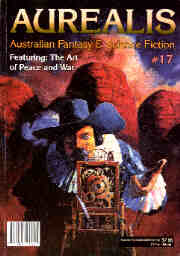
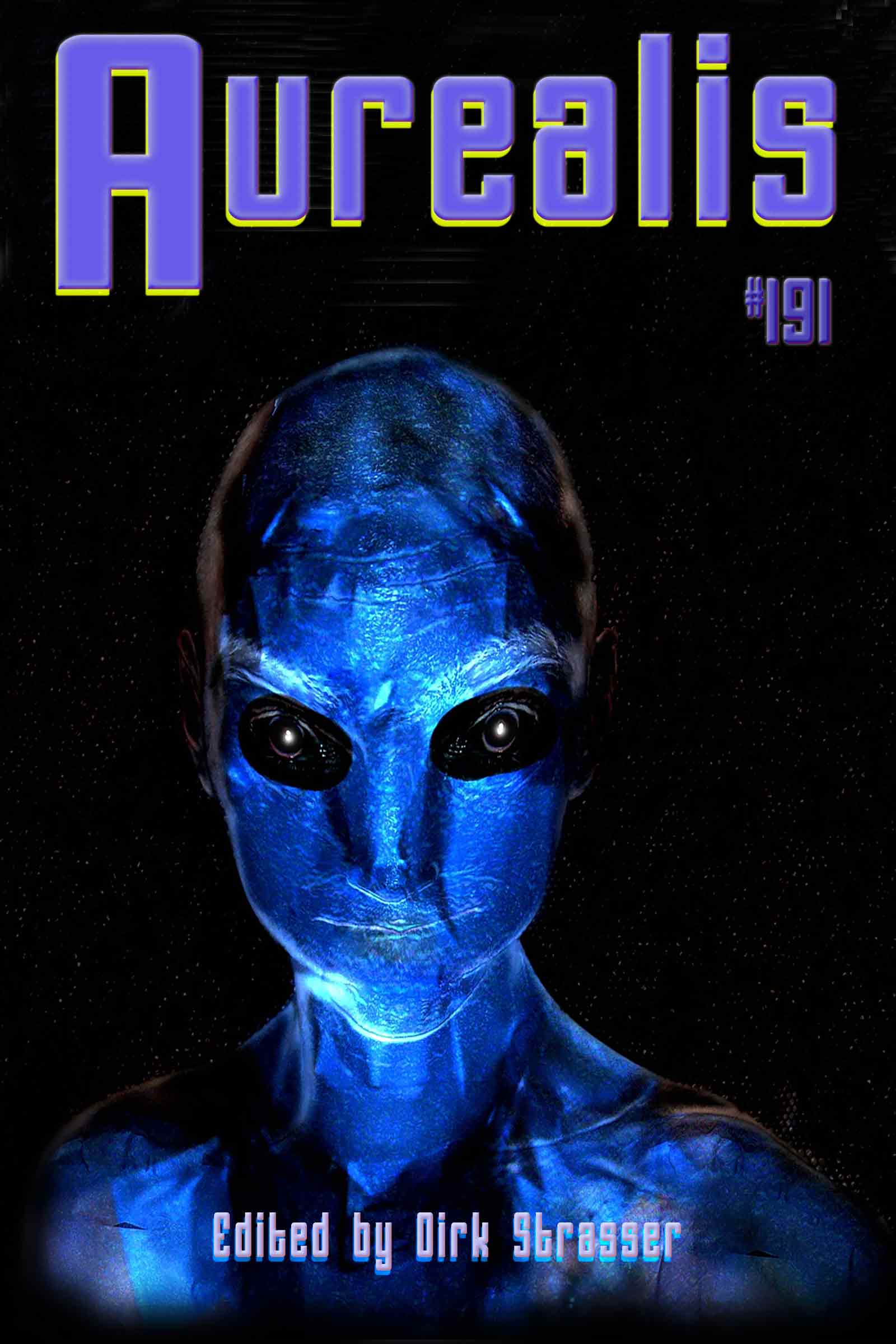
Aurealis #191
$3.99
Aurealis #191 features the provocative ‘The New Thirty’ by Anne Aulsebrook, stunningly illustrated by Peter Allert, the dynamic ‘Crow’ by Kit Holmes, masterfully illustrated by Joel Bisaillon and the thoughtful ‘A Good Age to Go’ by Adam Porkolab, sensationally illustrated by Rebecca Stewart. Our engrossing non-fiction roster brings you ‘The Magic Realism of Barbara Comyns’ by Lynne Lumsden Green, ‘Paying for Impossibility—the Trade-off in Science Fiction’ by Matthew Harrison and Travis Baldree has a fascinating interview with Trevor Howis. And don’t forget our comprehensive Reviews section! Aurealis, the Spec Fic Breakfast of Champions!
- From the Cloud — Dirk Strasser
- The New Thirty — Anne Aulsebrook
- Crow — Kit Holmes
- A Good Age to Go — Adam Porkolab
- The Reciprocal Relationship between AI and Pop Culture in the 20th Century — Lynne Lumsden Green
- Paying for Impossibility—the Trade-off in Science Fiction — Matthew Harrison
- Interview with Travis Baldree — Trevor Howis
What percentage of science fiction novels feature dystopias vs utopias?
Of course, it’s impossible to give an accurate figure, but some estimates suggest that overall 15-25% science fiction novels are set in a dystopia. This figure varies depending on the era and the age group. For example, estimates for the mid-20th century science fiction Golden Age are lower, while estimates for Young Adult SF novels since 2000 are as high as 50%. And my feeling is the numbers would be even higher for movies and series.
Dystopias are so pervasive in science fiction that there are several sub-categories. Orwellian dystopias, like 1984, feature totalitarian regimes that function through violent repression, constant surveillance and physical punishment. There are Huxleyan ones, as in Brave New World, where people are pacified and controlled by their own desires. Kafkaesque dystopias, like The Trial, dehumanise and control people through mindless bureaucracies and absurd rules, while Phildickian ones, such as Do Androids Dream of Electric Sheep, maintain control by making it impossible for people to distinguish between the real and simulated worlds.
On the other hand, less than 5% of science fiction novels are considered to be set in a utopia. The consensus is that dystopias far outweigh utopias, and the reason is that novels need conflict—which dystopias provide in spades—while utopias can be… well, boring.
There are exceptions, however, some of which critics refer to as ‘ambiguous utopias’. Star Trek’s United Federation of Planets is often held up as a utopian exception of a peaceful, egalitarian society without hunger, disease and poverty, where all the conflicts come from outside the Federation’s borders. Iain M. Banks’ The Culture series is also considered a utopia. Ursula K Le Guin’s short story ‘The Ones Who Walk Away from Omelas’ presents a genuine utopian city which, unfortunately, depends on the perpetual misery one innocent child.
The inaugural Protopian Prize adds something different to the science fiction mix. It’s a competition for unpublished short stories set in a future which is neither a perfect utopia nor a disastrous dystopia. Instead, the stories need to focus on achievable, optimistic progress that makes the world better than today: a protopia. There are two categories, The Public AI Prize and The Democratic Futures Prize, each with a USD$5000 winners’ prize. Entries close on 31 July 2026. Why not have a go at imaging a better world?
All the best from the cloud!
Dirk Strasser
From The New Thirty by Anne Aulsebrook:
Ninety-nine percent success rate, the box says. The canisters each have a little needle on the end and they slide into Jonathan’s skin like birthday candles. The trick is to wait until the stuff takes properly. You wait until the skin grows puffy, like a cake beginning to rise, then let it fall flat again. That’s how you know it’s taken. If you pull the point out too early, people can wind up looking a bit patchy and strange. Never Jonathan, though. I take pride in my work.
From Crow by Kit Holmes:
Abraham was not dressed for company, let alone to protect himself from a rabid animal. But the noises in the shed were only getting louder. A sort of thumping, feral banging that no human could make. For a bitter moment, he hoped it had woken Isaac in the main house; he had to be up early tomorrow.
From A Good Age to Go by Adam Porkolab:
The old were the conscience of every civilisation I have ever reaped. This is the first one that figured out how to sell them before they could speak. I have taken three hundred billion people over the millennia, and most of them were boring. Not their deaths—death is never boring, always the most honest moment in a life, when the body finally stops lying and the scent of the skin changes and something goes out behind the eyes that no one knew was there until it vanished—but they themselves. Predictable. They cried, begged, offered bargains, as if I contained a thing that could be bargained with. As if I contained anything at all.
From The Reciprocal Relationship between AI and Pop Culture in the 20th Century by Lynne Lumsden Green:
The current news media seems to be overwhelmed with discussions and articles about Artificial Intelligence and its impact on humanity. This isn’t a current phenomenon; AI has been a topic of interest since the Victorian era. Every decade has had its own conversations about how AI will be utilised by society, and the best indication of those changing attitudes are the stories created in popular culture. In return, pop culture has influenced how society perceives AI.
From Paying for Impossibility—the Trade-off in Science Fiction by Matthew Harrison:
Every science fiction story rests on an aberration. Much in the story is recognisable from the everyday world its readers live in, but one thing is different. It is that the story is set in space, or on another planet, or a future Earth; or it’s about an actor who is non-human, or a human who has been enhanced; or the world itself has been invaded or transformed in some way. This departure from reality, underpinned by science, is what makes the story science fiction. But what distinguishes good science fiction from ‘also-ran’ science fiction? Is it the convincingness of the aberration—the quality of the underlying science? Or is it something else?
From Interview with Travis Baldree by Trevor Howis:
Travis Baldree is a man of many talents. He’s a game designer, an audiobook narrator and the author of Legends & Lattes, originally self-published in February 2022. A second edition was published by TOR Books in November of the same year. The book has since sprouted a series and an upcoming graphic novel, and coined the term cozy fantasy which has become a subgenre in its own right. Yet Travis had nothing to do with this term and was as surprised as everyone else about how quickly everything developed.